
How to Manage Warehouse Capacity During Global Shipping Delays and Recovery Phases
Introduction
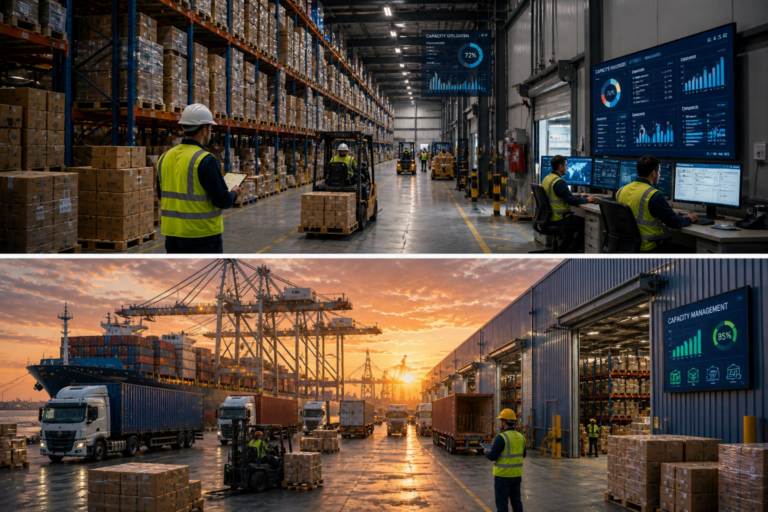
If you’ve ever walked into a warehouse during a major shipping delay, you’ll recognize the signs immediately, packed aisles, overflowing pallets, and teams scrambling to find space. When global shipping slows down and then suddenly recovers, warehouses are the first place where pressure shows.
This isn’t just a space problem. It’s a planning problem.
During delays, goods stay longer than expected. During recovery, they arrive all at once. Without a structured approach, warehouses can quickly lose control, leading to inefficiencies, increased costs, and missed deliveries.
In this blog, we’ll break down how to manage warehouse capacity effectively during global shipping delays and recovery phases—and how to turn pressure into operational advantage.
Why Shipping Delays Create Capacity Problems
Shipping disruptions don’t just delay cargo, they distort the entire inventory flow.
Instead of:
- Steady inbound shipments
You get:
- Sudden bulk arrivals
- Longer storage duration
- Irregular dispatch cycles
This creates a mismatch between planned capacity and actual demand.
The Two Critical Phases You Must Handle
1. Delay Phase (Slow Inbound Flow)
During this phase:
- Outbound shipments continue
- Inbound shipments are delayed
- Warehouse fills slowly but steadily
Key issue: inventory stays longer than planned
2. Recovery Phase (Bulk Inbound Flow)
When shipping resumes:
- Multiple delayed shipments arrive together
- Storage demand spikes instantly
- Handling pressure increases
Key issue: sudden overload
Core Challenges in Warehouse Capacity Management
1. Space Shortage
- Storage areas fill beyond capacity
- Temporary stacking increases risk
- Layout becomes inefficient
2. Operational Congestion
- Movement slows down
- Equipment traffic increases
- Loading and unloading delays occur
3. Inventory Disorganization
- Items get misplaced
- Tracking becomes difficult
- Retrieval time increases
4. Increased Risk of Damage
- Improper stacking
- Rushed handling
- Limited access space
Strategies to Manage Warehouse Capacity Effectively
1. Reorganize Storage Based on Priority
Not all inventory is equal.
- Fast-moving goods → near dispatch zones
- Slow-moving goods → deeper storage
This improves flow and reduces congestion.
2. Use Vertical Space More Efficiently
Many warehouses underutilize vertical capacity.
- Adjust rack heights
- Use stacking safely
- Optimize storage density
More space without expansion.
3. Create Temporary Overflow Zones
During peak periods:
- Set up dedicated overflow areas
- Use external storage if required
- Keep overflow organized (not random stacking)
This prevents chaos.
4. Align Inbound and Outbound Planning
Coordination is critical.
- Schedule arrivals based on available space
- Plan dispatch before receiving bulk shipments
- Avoid overlapping operations
Better timing = better capacity control.
5. Reduce Unnecessary Handling
Every extra movement creates pressure.
- Avoid re-handling
- Use direct storage or cross-docking
- Keep movement paths clear
Efficiency reduces load.
The Role of Smart Layout Design
Warehouse layout directly affects capacity.
An optimized layout:
- Separates inbound and outbound zones
- Maintains clear aisles
- Supports smooth flow
Poor layout increases congestion—even with enough space.
How Technology Helps Manage Capacity
Modern warehouses rely on:
- Inventory management systems
- Real-time tracking tools
- Data-driven planning
These tools help:
- Predict incoming volume
- Track space usage
- Improve decision-making
Comparison: Poor vs Managed Capacity
| Area | Poor Capacity Management | Optimized Capacity |
|---|---|---|
| Space usage | Random | Structured |
| Movement | Congested | Smooth |
| Handling | Repetitive | Efficient |
| Inventory control | Weak | Strong |
| Performance | Unstable | Reliable |
Structured systems always perform better.
Real-World Insight
In one operation, a company faced major congestion after delayed shipments arrived together.
Initial situation:
- Warehouse reached full capacity
- Goods were stacked in open areas
- Dispatch slowed down
What changed:
- Inventory was categorized by priority
- Temporary zones were created
- Dispatch schedules were adjusted
Result:
- Congestion reduced
- Movement improved
- Operations stabilized
No extra space was added—just better planning.
Why Flexibility Is More Important Than Space
Many businesses think they need bigger warehouses.
Reality:
They need more flexible systems
Flexible warehouses:
- Adapt to volume changes
- Reorganize quickly
- Maintain control under pressure
How URSA Helps Manage Warehouse Capacity
URSA Handling Services supports businesses with structured and efficient warehouse operations.
URSA focuses on:
- Optimized storage planning
- Efficient cargo handling
- Coordinated inbound and outbound flow
- Reducing congestion and delays
By improving operational discipline, URSA helps businesses handle high-volume situations without losing control.
Best Practices Checklist
To manage capacity effectively:
- Plan for unpredictable shipment volumes
- Maintain buffer storage space
- Optimize layout and flow
- Coordinate inbound and outbound operations
- Monitor performance regularly
Consistency is key.
Long-Term Advantage of Capacity Management
Effective capacity management leads to:
- Lower operational costs
- Faster order processing
- Improved safety
- Better customer satisfaction
It transforms warehousing into a strategic advantage.
Conclusion
Global shipping delays and recovery phases are unavoidable in today’s logistics environment. What businesses can control is how they respond.
Warehouse capacity is not just about space, it’s about planning, coordination, and flexibility. By implementing structured strategies and maintaining operational discipline, businesses can handle even the most unpredictable conditions.
With the support of experienced partners like URSA Handling Services, warehouse operations can remain efficient, organized, and resilient under pressure.
Call to Action
Is your warehouse struggling to handle sudden shipment volume changes?
If you want to improve capacity management and maintain smooth operations, it is time to optimize your approach.
Contact URSA Handling Services today and take control of your warehouse performance.