
How Rising and Fluctuating Fuel Costs Impact Cargo Handling and Distribution
Introduction
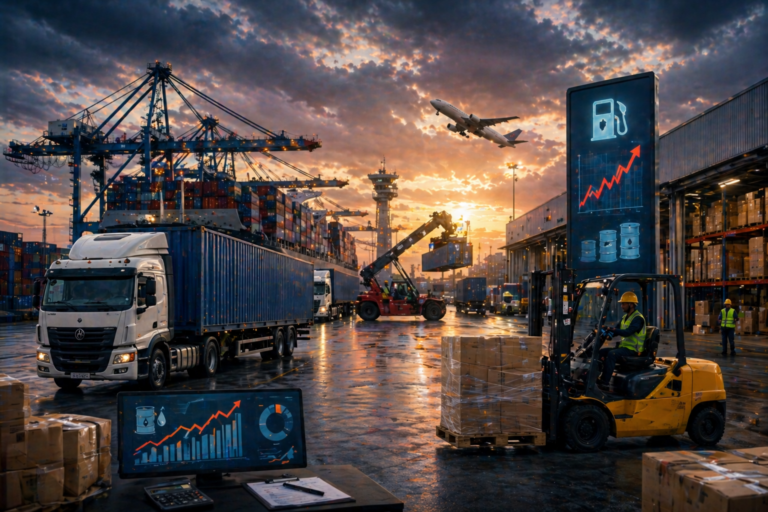
Fuel costs play a critical role in logistics operations. Whether it is transporting goods, operating equipment, or managing distribution networks, fuel is a key expense that directly influences efficiency and profitability. In recent times, fuel prices have become increasingly volatile, creating uncertainty across the supply chain.
While most businesses associate fuel costs with transportation, the impact goes far beyond that. Rising and fluctuating fuel costs affect cargo handling, warehousing operations, and distribution efficiency in multiple ways. Understanding these effects is essential for businesses looking to maintain stable logistics performance.
In this blog, we explore how fuel cost volatility impacts cargo handling and distribution and how businesses can adapt to these changing conditions.
Understanding Fuel Cost Volatility in Logistics
Fuel prices are influenced by several factors:
- Global supply and demand
- Geopolitical tensions
- Refinery capacity
- Transportation disruptions
These factors create fluctuations that can occur quickly and unpredictably. For logistics operations, this means costs are constantly changing.
Why Fuel Costs Matter Beyond Transportation
Fuel is not only used for long-distance transport. It also supports:
- Warehouse equipment operations
- Loading and unloading processes
- Short-distance cargo movement
- Distribution vehicle fleets
As fuel costs rise, every stage of logistics feels the impact.
Impact on Cargo Handling Operations
1. Increased Equipment Operating Costs
Cargo handling relies on equipment such as forklifts and yard vehicles.
When fuel prices rise:
- Operating costs increase
- Equipment usage becomes more expensive
- Maintenance planning becomes more critical
Higher costs affect overall handling efficiency.
2. Reduced Handling Flexibility
To control fuel expenses, operations may reduce equipment usage.
This can lead to:
- Slower cargo movement
- Delayed loading and unloading
- Reduced operational flexibility
Efficiency declines when handling becomes restricted.
3. Pressure on Operational Planning
Fuel fluctuations make planning difficult.
Handling teams must:
- Adjust schedules frequently
- Balance cost with speed
- Optimize resource allocation
Uncertainty complicates decision-making.
Impact on Distribution Operations
1. Higher Transportation Costs
Fuel is a major component of distribution expenses.
Rising costs result in:
- Increased delivery charges
- Higher last-mile expenses
- Reduced profit margins
Distribution becomes more expensive.
2. Route Optimization Challenges
Fluctuating fuel prices require constant route adjustments.
Businesses must:
- Plan shorter or more efficient routes
- Consolidate deliveries
- Reduce empty runs
Efficient routing becomes essential.
3. Delivery Time Adjustments
To manage fuel costs, companies may:
- Combine shipments
- Delay dispatch for cost efficiency
- Adjust delivery schedules
This can affect delivery speed and customer expectations.
Impact on Overall Supply Chain Performance
Fuel cost volatility affects the entire supply chain.
Key impacts include:
- Increased logistics costs
- Reduced operational predictability
- Higher pressure on planning and coordination
Businesses must adapt to maintain stability.
Comparison: Stable vs Volatile Fuel Conditions
| Area | Stable Fuel Prices | Volatile Fuel Prices |
|---|---|---|
| Cost planning | Predictable | Uncertain |
| Handling efficiency | Consistent | Variable |
| Distribution cost | Stable | Increasing |
| Operational planning | Straightforward | Complex |
| Risk level | Moderate | High |
Volatility increases complexity.
Real-World Operational Insight
In one logistics operation, fuel prices increased sharply over a short period.
Initial impact:
- Distribution costs rose significantly
- Handling schedules became inconsistent
- Delivery timelines were affected
After adapting operations:
- Routes were optimized
- Equipment usage was planned more efficiently
- Shipment consolidation improved
The business managed to control costs without reducing service quality.
How Businesses Can Adapt to Fuel Cost Changes
1. Improve Operational Efficiency
Efficiency reduces fuel dependency.
Businesses should:
- Minimize unnecessary handling
- Optimize warehouse layout
- Reduce idle equipment time
Small improvements create cost savings.
2. Optimize Distribution Planning
Better planning helps control fuel costs.
This includes:
- Consolidating shipments
- Planning efficient delivery routes
- Reducing empty trips
Optimized distribution improves performance.
3. Use Data for Better Decision-Making
Tracking fuel usage and costs helps:
- Identify inefficiencies
- Improve planning accuracy
- Adjust operations quickly
Data-driven decisions reduce risk.
4. Strengthen Coordination Across Operations
Coordination between warehouse and distribution teams ensures:
- Smooth cargo flow
- Reduced delays
- Efficient resource use
Integrated operations improve resilience.
Why Flexibility Is Key in Fuel-Driven Logistics
Rigid systems struggle during cost fluctuations.
Flexible operations:
- Adjust quickly to changing costs
- Maintain efficiency under pressure
- Support consistent service levels
Flexibility ensures long-term stability.
How URSA Supports Efficient Handling and Distribution
URSA Handling Services helps businesses manage the impact of rising fuel costs through structured operations.
URSA focuses on:
- Efficient cargo handling processes
- Optimized warehouse flow
- Coordinated distribution planning
- Reduced operational waste
By improving efficiency and coordination, URSA helps clients control costs and maintain performance.
Best Practices for Managing Fuel Cost Impact
To handle fuel cost volatility effectively:
- Monitor fuel trends regularly
- Optimize warehouse and handling operations
- Plan distribution routes carefully
- Reduce unnecessary movements
- Improve coordination across teams
Prepared businesses adapt faster.
Long-Term Outlook
Fuel price fluctuations are likely to continue due to global uncertainties.
Businesses must:
- Build flexible logistics systems
- Focus on efficiency
- Plan for cost variability
Adapting to volatility is essential for long-term success.
Conclusion
Rising and fluctuating fuel costs impact more than just transportation. They influence cargo handling, warehouse operations, and distribution efficiency across the supply chain.
Businesses that understand these effects and adapt their operations can maintain stability even in uncertain conditions. By focusing on efficiency, planning, and coordination, logistics performance can remain strong despite cost pressures.
With experienced partners like URSA Handling Services, businesses can manage fuel-related challenges and ensure smooth cargo handling and distribution operations.
Call to Action
Are rising fuel costs affecting your cargo handling and distribution efficiency?
If you want to optimize your operations and reduce cost pressure, it is time to adopt smarter logistics strategies.
Contact URSA Handling Services today to improve efficiency and strengthen your supply chain.