
Why Efficient Cargo Handling Is Critical for Modern Supply Chains
Introduction
In an era where customer expectations are higher than ever and supply chains span multiple continents, the way cargo is handled at every touchpoint has become a defining competitive factor. A single inefficiency at a warehouse dock, a mislabeled container at a transshipment hub, or a delay in freight loading can cascade into missed delivery windows, financial penalties, and damaged business relationships.
Efficient cargo handling is no longer simply an operational concern. It is a strategic imperative for any business that depends on the reliable movement of goods. At Ursa Service, we understand that excellence in cargo management is the foundation upon which world-class supply chains are built.
This blog explores what efficient cargo handling truly means, why it is so critical in today’s logistics environment, and what best practices and technologies are shaping the future of supply chain performance.
1. What Is Cargo Handling and Why Does It Matter?
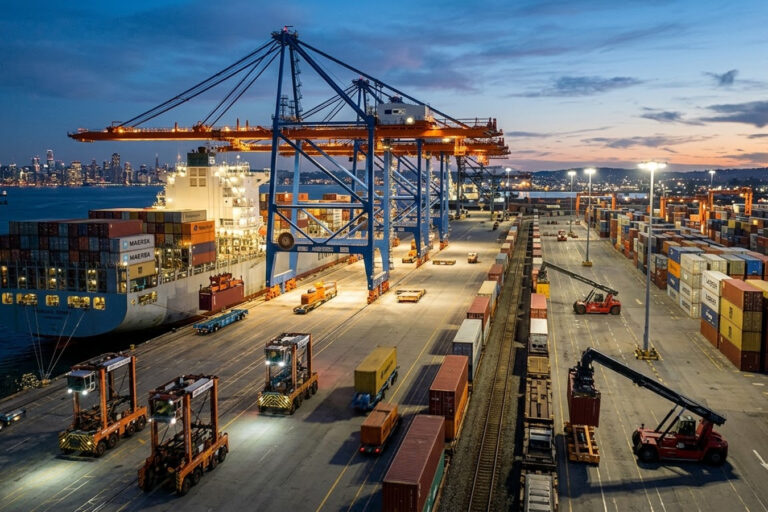
Cargo handling refers to all the processes involved in loading, unloading, storing, transferring, and managing goods throughout their journey across the supply chain. This includes port terminal operations, warehouse receiving and dispatch, cross-docking, container stuffing and stripping, palletization, freight consolidation, and last-mile preparation.
Each of these activities involves both physical labor and coordination across multiple stakeholders including freight carriers, customs authorities, warehouse operators, and end customers. When any one of these processes breaks down, the effects ripple outward with surprising speed and severity.
The Cost of Inefficiency
The financial cost of poor cargo handling is staggering. Industry analysts estimate that logistics inefficiencies cost global businesses hundreds of billions of dollars annually through damaged goods, delayed shipments, unnecessary storage fees, and expedited freight charges. Beyond direct costs, the reputational damage caused by repeated delivery failures or cargo damage can erode customer trust that took years to build.
- Cargo damage from improper handling increases insurance claims and replacement costs
- Loading errors cause delays that trigger penalty clauses in customer contracts
- Inefficient storage and retrieval slows warehouse throughput and increases labor costs
- Documentation errors create customs holds that can delay shipments for days or weeks
- Poor inventory visibility leads to overstocking, understocking, and missed orders
2. Key Elements of Efficient Cargo Handling
2.1 Standardized Loading and Unloading Procedures
Consistency is the bedrock of cargo handling efficiency. When loading and unloading procedures are standardized across all facilities and teams, errors decrease, training becomes faster, and throughput improves significantly. Standardization covers everything from how pallets are stacked and secured to how containers are loaded to maximize space utilization and minimize shifting during transit.
At Ursa Service, our operations teams follow documented standard operating procedures for every cargo type, ensuring that goods are handled correctly from the first touchpoint to the last.
2.2 Accurate Documentation and Labeling
Mislabeled cargo is one of the most common and costly sources of supply chain disruption. Incorrect shipping marks, wrong HS codes on customs declarations, or inaccurate bill of lading information can result in customs holds, refused shipments, or goods being delivered to the wrong destination entirely.
Efficient cargo handling requires rigorous attention to documentation accuracy at every stage. This includes verification checks before loading, digital documentation systems that reduce manual data entry errors, and barcode or RFID scanning to confirm cargo identity at each handover point.
Research consistently shows that digitizing documentation processes reduces cargo handling errors by up to 40% compared to paper-based systems, while simultaneously accelerating customs clearance times.
2.3 Optimized Warehouse Layout and Storage Systems
The physical design of a warehouse directly determines how efficiently cargo can be received, stored, and dispatched. An optimized warehouse layout minimizes travel distances for pickers, ensures clear separation of inbound and outbound staging areas, and locates high-velocity SKUs near dispatch zones. Racking systems, shelving configurations, and floor space allocation all play a role in determining throughput capacity.
- Slotting optimization reduces picker travel time by 20 to 35%
- Clear aisle marking and signage improves forklift safety and throughput
- Dedicated staging zones prevent mixing of inbound and outbound cargo
- Climate-controlled zones protect temperature-sensitive cargo integrity
- Dynamic storage systems adapt to seasonal volume fluctuations
2.4 Equipment Reliability and Maintenance
Efficient cargo handling depends on reliable equipment. A forklift breakdown during a critical loading window, a conveyor system malfunction at a distribution center, or a crane failure at a port terminal can bring operations to a standstill. Preventive maintenance programs, regular equipment inspections, and rapid-response repair protocols are essential to maintaining operational continuity.
Businesses that neglect equipment maintenance invariably experience higher rates of cargo damage, workplace accidents, and unexpected downtime, all of which erode supply chain performance.
2.5 Skilled and Well-Trained Workforce
Even the best facilities and equipment cannot compensate for an undertrained workforce. Cargo handlers who understand the specific requirements of different cargo types, who are certified in equipment operation, and who are trained to identify and escalate problems proactively are a critical competitive asset. Ongoing training programs, performance incentives, and clear operational accountability structures all contribute to a high-performing cargo handling team.
3. Technology Transforming Cargo Handling Efficiency
3.1 Warehouse Management Systems (WMS)
Modern Warehouse Management Systems provide real-time visibility into every item within a facility, from the moment it is received to the moment it leaves. A WMS directs warehouse staff to optimal storage locations, generates pick lists sequenced for maximum efficiency, and tracks inventory levels with precision that manual systems simply cannot match. Integration with transportation management systems and customer order platforms creates an end-to-end digital thread across the supply chain.
3.2 Automated Guided Vehicles and Robotics
Automation is rapidly transforming cargo handling operations. Automated Guided Vehicles (AGVs) transport pallets and containers within warehouses without human intervention, operating around the clock with consistent precision. Robotic picking arms handle repetitive sort-and-place tasks at speeds and accuracy rates that outperform manual operations. These technologies not only increase throughput but also reduce workplace injuries associated with manual heavy lifting.
Leading logistics operators deploying AGVs and robotics have reported throughput increases of 50 to 80% alongside significant reductions in cargo damage rates, demonstrating the transformative potential of automation in cargo handling.
3.3 RFID and IoT Cargo Tracking
Radio Frequency Identification (RFID) tags and Internet of Things (IoT) sensors provide continuous, real-time visibility into the location and condition of cargo throughout its journey. RFID scanning at gate entries, dock doors, and storage locations eliminates manual scanning steps and enables instant inventory reconciliation. IoT sensors monitor temperature, humidity, shock, and light exposure for sensitive cargo, alerting handlers to any conditions that could compromise product integrity.
3.4 AI-Powered Load Planning and Optimization
Artificial intelligence algorithms are now being applied to container and vehicle load planning, automatically generating configurations that maximize space utilization while respecting weight distribution limits, cargo compatibility requirements, and unloading sequence constraints. This reduces the number of vehicles required per shipment, lowers fuel costs, and minimizes cargo damage caused by improper load distribution.
3.5 Digital Twin Technology
Some of the world’s most advanced logistics operators are now using digital twin technology, creating virtual replicas of their cargo handling facilities to simulate operational scenarios, test layout changes, and optimize workflows without disrupting live operations. This capability allows continuous improvement without operational risk, accelerating the pace at which facilities can adapt to changing demand patterns.
4. Cargo Handling Across Different Supply Chain Sectors
4.1 Retail and E-Commerce
The explosive growth of e-commerce has fundamentally changed cargo handling requirements. Retailers now manage enormous SKU varieties, process high volumes of small individual orders, and must meet same-day or next-day delivery commitments that leave zero margin for handling errors. Efficient cargo handling in this environment requires sophisticated sortation systems, seamless returns processing, and the flexibility to scale operations rapidly during peak seasons.
4.2 Automotive and Industrial
Automotive supply chains operate on just-in-time principles where components must arrive at assembly lines at precisely scheduled intervals. A single delayed or damaged parts shipment can halt an entire production line, generating losses of tens of thousands of dollars per hour. Cargo handling in this sector demands exceptional precision, specialized equipment for heavy components, and rigorous sequencing to match assembly line requirements.
4.3 Pharmaceuticals and Healthcare
Pharmaceutical cargo handling is among the most regulated and demanding of all supply chain sectors. Products must be maintained within strict temperature ranges, handled with contamination controls, and tracked with complete chain-of-custody documentation for regulatory compliance. Efficient handling in this sector is not only a business performance issue but directly impacts patient safety and regulatory standing.
4.4 Food and Perishables
Perishable goods have unforgiving handling requirements. Temperature breaks, delays in cold chain transfers, and improper stacking can render entire shipments unsaleable. Efficient cargo handling for perishables requires pre-cooled dock environments, rapid unloading protocols, first-in-first-out inventory management, and real-time temperature monitoring throughout the handling and storage process.
5. Best Practices for Optimizing Cargo Handling Performance
Organizations seeking to elevate their cargo handling efficiency should focus on the following proven practices:
- Conduct a comprehensive cargo handling audit to identify bottlenecks, error hotspots, and equipment gaps in existing operations
- Implement a digital WMS if not already in place, and integrate it with carrier and customer systems for end-to-end visibility
- Invest in workforce training programs covering both technical skills and safety protocols to build a reliable, high-performing handling team
- Establish clear key performance indicators for cargo handling including damage rates, loading accuracy, throughput per hour, and on-time departure compliance
- Evaluate automation opportunities in repetitive, high-volume handling tasks to improve speed, accuracy, and operational consistency
- Review and optimize warehouse layout at least annually, incorporating slotting analysis and workflow simulation to adapt to changing product mixes
- Build strong relationships with equipment suppliers to ensure rapid maintenance response times and access to upgrade paths as technology evolves
6. How Ursa Service Delivers Cargo Handling Excellence
At Ursa Service, we have built our logistics capabilities around the principle that efficient cargo handling is not simply a process, it is a commitment to our clients’ business success. Our integrated approach combines state-of-the-art facilities, rigorously trained operations teams, and advanced technology platforms to deliver cargo handling performance that our clients can rely on.
- Modern warehouse facilities with optimized layouts and dedicated cargo staging zones
- End-to-end digital tracking providing real-time cargo visibility at every handling point
- Specialized handling capabilities for hazardous goods, temperature-sensitive cargo, and oversized freight
- Proactive exception management with immediate client communication when handling issues arise
- Continuous performance monitoring against agreed KPIs with regular reporting and review
- Flexible capacity scaling to manage volume surges without compromising handling standards
Whether your supply chain involves ocean freight, air cargo, road transport, or complex multimodal movements, Ursa Service provides the cargo handling expertise and infrastructure to keep your goods moving with precision and care.
Conclusion
Efficient cargo handling sits at the heart of every high-performing supply chain. As global trade volumes grow, customer expectations intensify, and supply chain complexity increases, the organizations that invest in cargo handling excellence will consistently outperform those that treat it as a secondary concern.
From standardized procedures and skilled workforces to digital platforms and intelligent automation, the tools and approaches available to logistics professionals today make world-class cargo handling more achievable than ever. The key is commitment, investment, and the right operational partner.
Ready to elevate your cargo handling performance and strengthen your supply chain? Contact Ursa Service today and discover how our logistics expertise can help your business achieve new levels of efficiency, reliability, and growth.