
Why Efficient Terminal and Warehouse Coordination Matters More After Global
Introduction
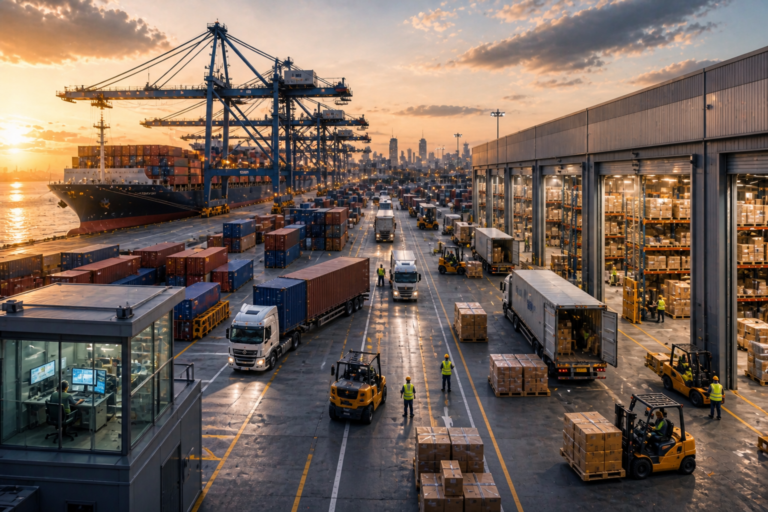
Global disruptions have exposed one of the most overlooked weaknesses in logistics systems: lack of coordination between terminals and warehouses. While much attention is given to shipping delays and transport challenges, the real bottlenecks often occur at the transition points where cargo moves from terminals to storage facilities.
After major disruptions, cargo rarely arrives in a steady flow. Instead, shipments come in waves, creating congestion at ports and overwhelming warehouse capacity. Without efficient coordination between terminal operations and warehouse management, delays increase, costs rise, and supply chains lose stability.
In this blog, we explore why terminal and warehouse coordination has become more important than ever and how businesses can improve their logistics performance through better integration.
Understanding Terminals and Warehouses
To understand the importance of coordination, it is essential to define both roles clearly.
Terminal Operations
Terminals are responsible for:
- Receiving containers from ships
- Handling cargo at ports or inland terminals
- Staging containers for onward movement
Their primary focus is speed and throughput.
Warehouse Operations
Warehouses focus on:
- Storage and inventory management
- Order preparation
- Distribution planning
Their primary focus is organization and efficiency.
The Gap Between Terminal and Warehouse Operations
When these two functions operate separately, problems arise:
- Delays in cargo transfer
- Misalignment in schedules
- Increased handling time
- Congestion at terminals or warehouses
This gap becomes more visible during high-pressure situations such as global disruptions.
Why Coordination Matters More After Disruptions
1. Irregular Cargo Flow
After disruptions:
- Cargo arrives unpredictably
- Shipments are delayed and then released in bulk
Coordination ensures warehouses are prepared before cargo arrives.
2. Increased Volume Pressure
Sudden influx of containers creates pressure on both terminals and warehouses.
Without coordination:
- Terminals become congested
- Warehouses become overloaded
Aligned operations help distribute workload efficiently.
3. Faster Clearance and Movement
Efficient coordination allows:
- Faster container movement from terminal to warehouse
- Reduced dwell time at ports
- Lower storage and detention costs
Speed becomes critical during recovery phases.
4. Improved Resource Utilization
Coordinated operations ensure:
- Equipment is used efficiently
- Labor is allocated effectively
- Storage space is optimized
This reduces operational waste.
Impact of Poor Coordination
When coordination is weak, businesses face:
- Increased delays in delivery
- Higher operational costs
- Cargo handling inefficiencies
- Greater risk of damage
These issues directly affect supply chain performance.
Key Benefits of Strong Coordination
1. Reduced Turnaround Time
Smooth transfer between terminal and warehouse reduces waiting time.
2. Better Inventory Management
Warehouses receive cargo in a structured manner, improving stock control.
3. Lower Operational Costs
Efficient flow reduces unnecessary handling and storage expenses.
4. Improved Customer Satisfaction
Faster and more reliable deliveries build trust with customers.
Comparison: Poor vs Efficient Coordination
| Area | Poor Coordination | Efficient Coordination |
|---|---|---|
| Cargo movement | Delayed | Smooth |
| Storage utilization | Unbalanced | Optimized |
| Handling time | Increased | Reduced |
| Cost | Higher | Controlled |
| Performance | Inconsistent | Reliable |
Coordination improves consistency.
Real-World Operational Insight
In one logistics operation, terminal congestion increased due to delayed shipments arriving simultaneously.
Initial issues:
- Containers remained at the terminal longer
- Warehouse space was not prepared
- Delivery schedules were disrupted
After improving coordination:
- Warehouse received advance shipment data
- Storage space was allocated in advance
- Transport scheduling was aligned
Result:
- Faster cargo movement
- Reduced congestion
- Improved delivery timelines
How to Improve Terminal and Warehouse Coordination
1. Share Real-Time Information
Data sharing ensures both sides are aligned.
This includes:
- Shipment arrival schedules
- Cargo volume details
- Delivery priorities
2. Align Operational Schedules
Synchronizing schedules reduces delays.
- Plan warehouse readiness before container arrival
- Coordinate loading and unloading timings
3. Optimize Cargo Flow
Design processes that support smooth movement.
- Direct transfer from terminal to storage
- Minimize unnecessary handling
- Maintain clear staging areas
4. Use Technology for Integration
Digital tools improve coordination.
- Tracking systems
- Inventory management platforms
- Communication tools
Technology reduces manual errors.
5. Maintain Structured Handling Practices
Consistency ensures reliability.
- Follow defined procedures
- Train staff regularly
- Monitor performance
Discipline improves efficiency.
Why Integration Is the Future of Logistics
Modern supply chains demand integration.
Businesses that connect terminal and warehouse operations:
- Improve efficiency
- Reduce delays
- Enhance flexibility
Integrated systems outperform isolated operations.
How URSA Supports Coordinated Operations
URSA Handling Services specializes in efficient cargo handling across terminals and warehouses.
URSA supports coordination by:
- Managing cargo flow from terminal to storage
- Optimizing handling processes
- Reducing dwell time
- Ensuring structured operations
By focusing on integration and efficiency, URSA helps businesses maintain smooth logistics performance even during challenging conditions.
Best Practices for Businesses
To improve coordination:
- Plan for irregular cargo arrivals
- Share information across teams
- Align warehouse and terminal schedules
- Monitor cargo movement continuously
- Review and improve processes regularly
Strong coordination leads to better results.
Long-Term Importance of Coordination
Even after disruptions stabilize, coordination remains critical.
Efficient systems:
- Support consistent operations
- Reduce future risks
- Improve overall supply chain performance
Coordination is a long-term advantage.
Conclusion
Global disruptions have highlighted the importance of strong coordination between terminals and warehouses. When these functions operate in alignment, cargo moves faster, costs remain controlled, and supply chains become more resilient.
Efficient coordination is no longer optional. It is essential for maintaining performance in a dynamic logistics environment. With experienced partners like URSA Handling Services, businesses can build integrated systems that support smooth and reliable operations.
Call to Action
Is your supply chain facing delays due to poor coordination between terminals and warehouses?
If you want to improve efficiency and reduce operational bottlenecks, it is time to focus on integration.
Contact URSA Handling Services today to optimize your logistics performance.